

Deutsche Post’s Partner Portal: A Headless TYPO3 Transformation
How Telekom MMS transformed a business-critical legacy platform into a modern digital workplace for Deutsche Post’s retail partners
In this article
Are you interested in learning how to reshape your organization's digital presence with TYPO3?
I'm interestedIntroduction
DHL Group is a global leader in the postal and logistics industry, offering a broad portfolio of express delivery, freight transportation, supply chain, e-commerce, as well as letter and parcel services. In Germany, the company operates an extensive physical service network. Around 13,000 postal outlets are complemented by DHL ServicePoints, Packstations, business mail and bulk acceptance locations, retail points, as well as mobile and digital services. A key element of the branch model of Deutsche Post, DHL Group’s postal and parcel brand in Germany, is its collaboration with retail partners, combining nationwide coverage with strong local presence and established retail infrastructures. By integrating physical, automated, mobile, and digital touchpoints, Deutsche Post provides a comprehensive service network that plays a key role in the customer journey for both private and business customers.
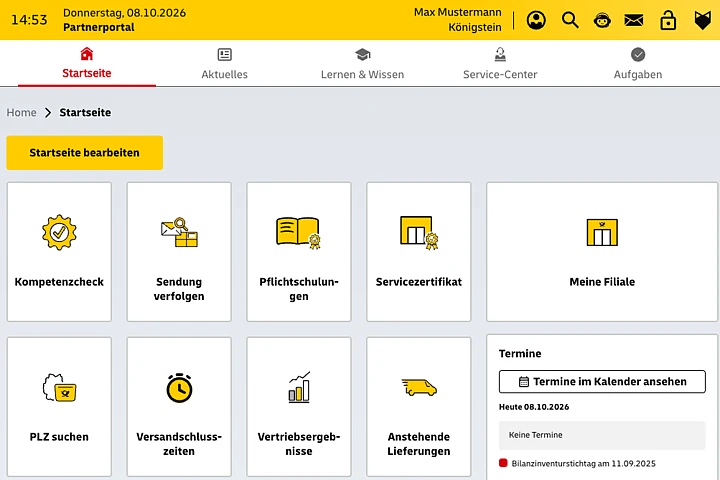
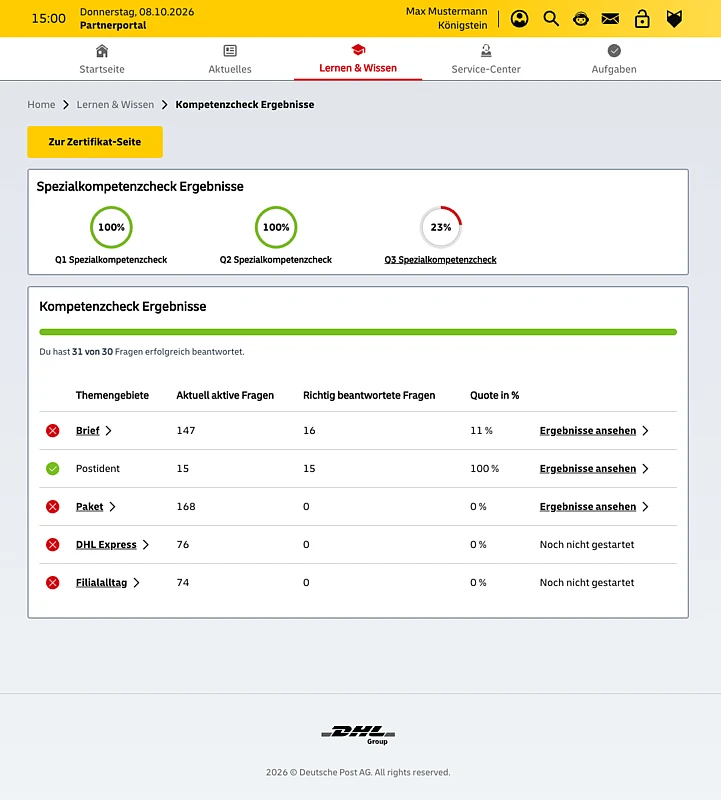
Deutsche Post partnered with Telekom MMS GmbH to relaunch its business-critical Partner Portal, a platform that had evolved since 2010, as a modern, user-friendly and future-ready digital workplace for its retail partners and their employees. Built on a headless TYPO3 architecture, integrated with external Salesforce services and moved to Kubernetes, the portal now gives users quick access to relevant information, training content and services.
What started with Telekom MMS taking over the legacy platform in 2022 has evolved into a trusted, long-term partnership.
Challenge
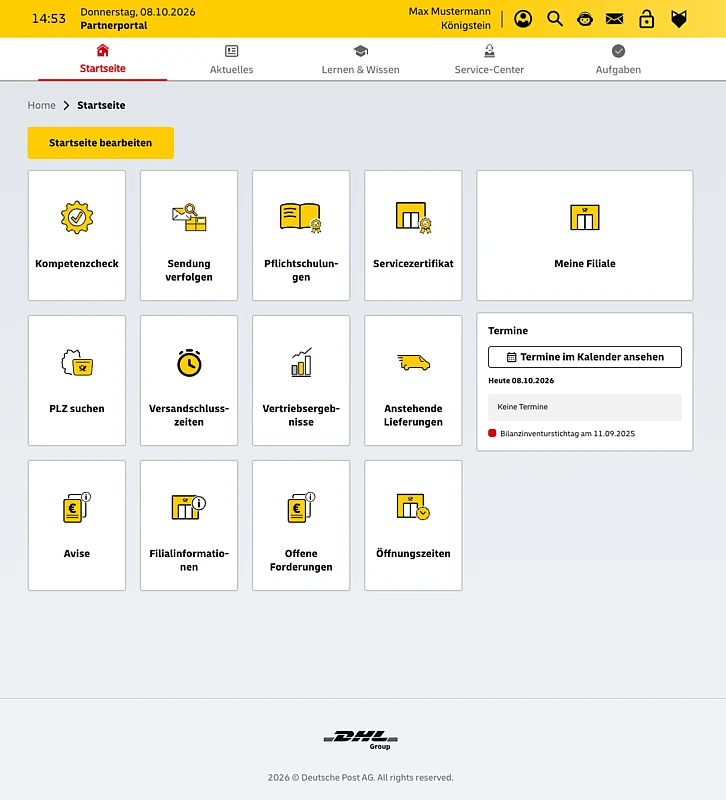
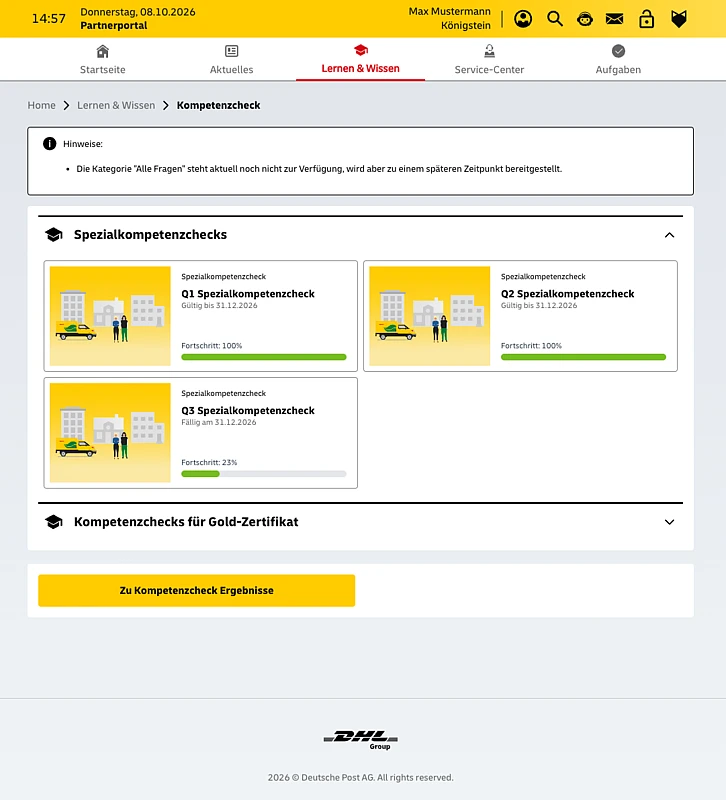
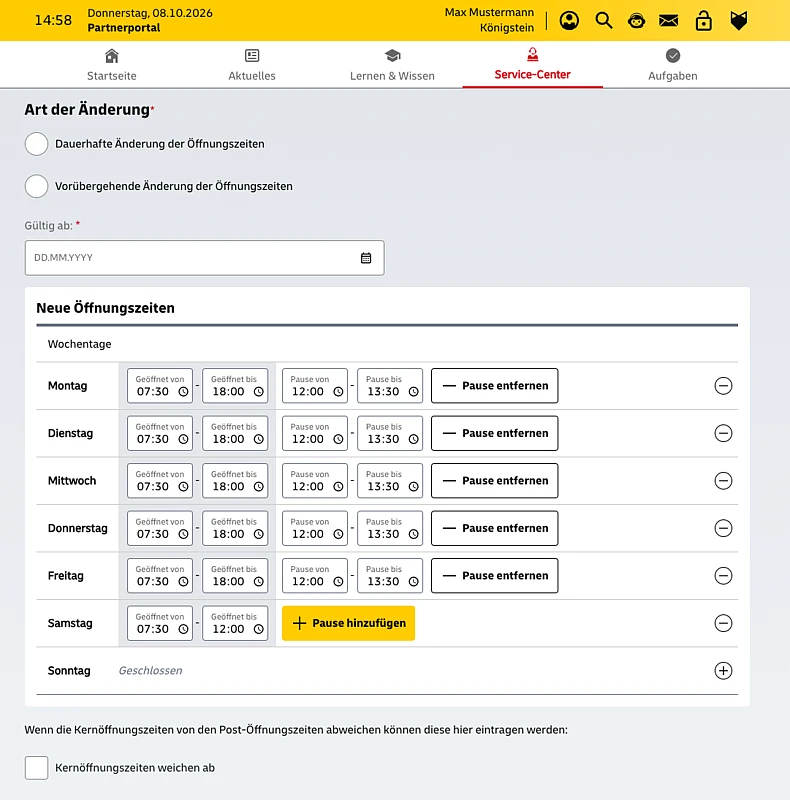
The relaunch needed to significantly improve usability through a clear navigation structure, intuitive information architecture and better overall transparency. At the same time, it had to preserve and seamlessly integrate the portal’s business capabilities: communication and collaboration tools, access to store-specific data, management of opening hours, surveys, and printing and scanning services. Employees also needed flexible access, both from dedicated partner terminals within the corporate network and via the internet.
With a diverse partner organization, each store and its users had to see only the content intended for them. The application architecture and underlying platform also needed a fundamental modernization, without disrupting ongoing operations.
Work Performed
After taking over the solution at the end of 2022, Telekom MMS GmbH first built a deep understanding of the historically grown system, its dependencies, services and operational processes, keeping it stable and operational throughout its transformation. The team then combined UX, content, application and integration expertise to redesign the portal around a clear information architecture and intuitive navigation, while preserving and integrating its essential functions.
TYPO3 was selected for its robust, scalable foundation for complex enterprise environments, its support for headless architecture, its flexible role and permission management, and its extensibility, backed by established security processes and LTS releases. Telekom MMS designed and implemented a headless architecture that separates content management from the frontend, so content is delivered via APIs and the components can evolve independently. Existing backend services and external Salesforce-based services were integrated into the new architecture.
Special content restrictions, configured when creating pages and content elements, ensure each store and its users only see content specifically intended for them. This goes significantly beyond TYPO3’s standard access control and provides more granular, flexible control over content visibility. In parallel, the entire infrastructure was moved from a VM-based environment to a Kubernetes-based architecture.
"A high level of expertise, proactive thinking, a solution-oriented approach, and a willingness to work together to go the extra mile to ensure successful implementation."
Outcome
The legacy Partner Portal was transformed into a modern, headless TYPO3 solution while preserving its business-critical information, training and self-service capabilities. The relaunch marked the foundation rather than the end of the transformation. Additional features and self-services are currently being implemented, and further projects and new initiatives are already planned.
These extend the partnership beyond the core Partner Portal and demonstrate a collaboration built on trust and continuous improvement.
Gallery & Features
Behind the project
The partner who made this TYPO3 project possible.

Deutsche Telekom MMS GmbH
We accompany companies and brands on new paths and develop future-proof business models for digital experiences. From user-centered ideation and UX/UI design to engineering and secure operation, we integrate cutting-edge artificial intelligence across the entire value chain. By utilizing open-source AI models and privacy-compliant workflows, we ensure full digital sovereignty, keeping data and intellectual property firmly under our clients' control.
From consulting to continuous evolution, we make digital tangible and contribute to the sustainable design of digital change. Our people at nine locations are passionate about designing outstanding, highly available, and resilient digital applications.